I chose to read this book because of the luring declaration on the cover, "The True Crimes and Passions of the World’s Greatest Reptile Smugglers." After reading it I feel that passion is too romantic of a word to use, maybe it should be replaced with ravenousness. The author, Bryan Christy, does an adequate job of keeping the story interesting, but there are definitely moments when I wished he would have just gotten to the point. The book doesn’t focus on one single "Lizard King" rather it chronicles the lives of many smugglers and how the crown was passed through generations. The excitement of the book lies in the tales of how mass amounts of reptiles would pass right under the noses of custom agents and how the smugglers lived on the edge of reason often times risking losing their freedom forever if they were to be caught.
Friday, April 24, 2009
#33: Ms. Zywica, Science Teacher
I chose to read this book because of the luring declaration on the cover, "The True Crimes and Passions of the World’s Greatest Reptile Smugglers." After reading it I feel that passion is too romantic of a word to use, maybe it should be replaced with ravenousness. The author, Bryan Christy, does an adequate job of keeping the story interesting, but there are definitely moments when I wished he would have just gotten to the point. The book doesn’t focus on one single "Lizard King" rather it chronicles the lives of many smugglers and how the crown was passed through generations. The excitement of the book lies in the tales of how mass amounts of reptiles would pass right under the noses of custom agents and how the smugglers lived on the edge of reason often times risking losing their freedom forever if they were to be caught.
Thursday, March 19, 2009
#31: Mr. Kohler, Data Coach
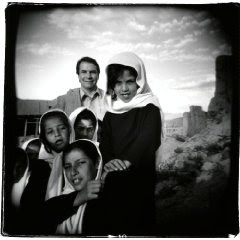
Three Cups of Tea is about Greg Mortenson a climber who failed to summit K2, the second tallest mountain in the world. On his way down he gets lost and wanders into the town of Korphe, Pakistan. Here he meets the village elder, who opens his house up to him and nurses him back to health. In this small village confronted by the incredible kindness of his hosts, Mortenson develops the idea of building a school for this village. Little did he know that this would become his lifelong mission.
Sunday, March 1, 2009
#30: Mrs. Timmons, Science
I posted a review on Dave Sedaris not too long ago, so I apologize if I sound a little redundant. Dave Sedaris writes short stories, and his books carry with them a quirky and quite funny sense of humor. When you read Sedaris's books, it's like you are getting an opportunity to listen to his thoughts. His thoughts can be somewhat demented and the dialog between himself and the characters within his life are many times laugh-out-loud. There are times where his thoughts mirror those of your own, allowing you to say to yourself, "Yeah! I wonder the same things sometimes!" While in other instances, his thoughts/analogies are NOTHING like the ones your personal mind experiences. You can tell that his stories are also taken from his real life. From shenanigans while growing up in Raleigh, North Carolina to living next to this grouchy old woman in his apartment building in New York City. None of his stories seem too far fetched or ridiculous to be true. Mary Newcomb (IB 7/8 Math) can vouch for some of the stories from Raleigh, as her brother actually lives in the house Dave Sedaris grew up in.
If you would like a great book that will literally have you laughing out loud and is convenient (you can read a few chapters and then set it down for a month without losing your place), then this is a book for you. I would recommend his other books as well, as the stories are all intertwined and build off of each other. His other books include Barrel Fever, Me Talk Pretty Someday, Naked, Dress Your Family in Corduroy and Denim, and a personal favorite, Holidays on Ice.
Thursday, February 19, 2009
#29: From Ms. Rodriques, Media Specialist
It was not only easy to read but was stock full of really cool information- did you know that their are pieces of German ships on the moon? This is a book we can recommend to those with high reading skills- 1170 lexile- but it is of great interest for those with limited reading skills as well. This writer put the equation into a real world perspective. First, he tells us about the origin of "E". How does the concept we now know as "energy" come to be?
The story winds itself around scientific history from Newton to how Einstein got his job in the patent office through the misunderstood relationship between Otto Hahn and Lise Meitner, physicists who helped to solve the mystery of the equation. Which one got the Nobel Prize? How do we decide the toll we take for the "greater good"? One violinist? The future health of millions of people? Count to 43 seconds- how long it took between the release of the first atomic bombs and the initial impact. How do we treat the scientists from Germany who were developing the same type of explosion? Were they "guilty" of war crimes or just furthering scientific discovery?
There are several biographic representations within the book- Newton, Einstein, Oppenheimer- and a slew of notes that give details about information within the chapters.
It's a great book, is in the media center and is ready to get checked out.
Saturday, January 17, 2009
#'s 27 & 28: From Mrs. Lyons, 8th Grade Language Arts
This is a continuation of the Gold Coast story. A family on Long Island is hounded by Mob neighbors and this picks up the lives of the husband (who got dragged into being a Mob lawyer) and his wife (who got “involved” with said mobster and ended up shooting and killing him). The mobster’s son wants to re-involve the lawyer in Mob business and get revenge for the murder of his father. Nelson DeMille has a knack for creating wise-guy characters that I really enjoy (does this have something to do with the kids we teach?). Purely for entertainment value – not a brain-stretcher.
#28: The Poisonwood Bible by Barbara Kingsolver
This is the story of a Baptist missionary family that heads to the Congo in 1960 to “save” the locals. It is a tale of how Americans charge in and botch things up without a clue as to the way of life that currently exists in a foreign country. The US government was very involved in the assassination of the elected leader, Lumumba. The American choice for his replacement was Mobuto, who was a cruel thief who built palaces for himself while the African people starved. The missionary children all were deeply affected, in entirely different ways, by their early experience in the Congo. In a way, this is also an environmental tale as well as a good story and commentary on US foreign policy. Thanks to Jen Powell for recommending it during our CAR-PD class!
Monday, January 5, 2009
#26: From Mr. Kohler, Data Coach
http://www.goenzo.com/
Wednesday, December 3, 2008
#25: From Mrs. Pelosi, Reading Teacher
I highly recommend this book to anyone working with immigrant students or service learning. It shows the experiences of a child trying to learn his way in a new world and turning what he learns into good for others. Learning and Serving!
Monday, September 22, 2008
#24: Ms. Connery, 7th Grade Language Arts
As I read this memoir, I continued to question how a child could suffer at the hands of other children at school and have no authority witness these acts. My thoughts then led me to question myself – what have I not seen happen to my students in my own classroom. This unknown answer sickens me. Ms. Blanco’s story ends on a very positive note, but to think how she endured the beatings, being spit on and ostracized for so long still makes the rainbow bittersweet.
This is a must read for all educators.
Friday, August 29, 2008
#23: From Mrs. Timmons, Multi-grade Science
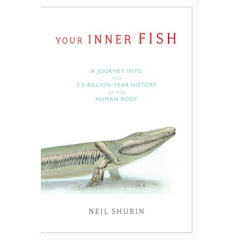
"A Journey into the 3.5 Billion Year History of the Human Body" is more than I bargained for. I listened to a podcast, On Point, which we download for free from iTunes, featuring this scientist. He is absolutely amazing to listen to, but even more remarkable to read about. This book details where our major organs originated from, how we as humans came to be.
Neil Shubin is first an anatomist and second, a fish paleontologist, who unearthed Tiktaalik, a 375 million year old fossil fish whose flat skull, limbs with fingers and wrist bones, provided a link between fish and the first land dwelling organism. But, he doesn't just hone in on this fish-like fossil, he finds cellular similarities between our cells and sponges. He links our teeth and ear bones, and identifies the origins of our senses. It is a science book for those who are hesitant to embrace scientific text (because it's usually SO boring!) and he writes in a manner that can be understood by all. This book will open your eyes to the similarities of species and the universal body plan that has changed over time to better fit the environment we live in.
I HIGHLY recommend this book if you have ever wondered where hiccups originated from, how we have gills in the womb and then we don't or if you are just amazed at how perfect organisms are for their time, place and purpose.
Wednesday, August 6, 2008
#21 and #22: From Mrs. Pelosi, Reading
2. The Lavender Field, by Jeanette Baker is a love story for the ages. Brought together by the Austrian government, lawyer Whitney Bendict has to convince Gabriel Mendoza to give up the Lipizzan stallions his father rescued during WWII by smuggling them from Austria to the United States. With his father's death, Gabriel had to give up his dreams of being a English Lit professor and came home to help on the family horse farm. With a disease ravaging the horses back in Austria, the Austrian government is pressuring him to sell them all the pure bred Lipizzans he has in his stable. Throw in some twists with an exwife who abandoned her family, a surly teenager, an out-of-control aging mother, a child with Asberger's Syndrome: a form of mild autism, and a huge field of lavender, and someone is sure to fall in love. It was a quick and easy read which brought me into the field of horse breeding and racing. A story that shows that your "dream" life may not be the end all and be all as Whitney learns what she is missing by isolating herself in the corporate world. I recommend this book for anyone with interests in love and and easy read!
#20: From Mr. Kohler, Data Coach
This summer, I’ve been reading a book called Generation Kill, by Evan Wright. Wright was with the First Reconnaissance Battalion Marines when they entered
Sunday, August 3, 2008
#19: From Mrs. Pelosi, Reading
Sunrise Over Fallujah, by Walter Dean Myers, usually a young adult author, takes a young man from the Bronx to
#18: Mrs. Shults, Literacy Coach
I was introduced to this book this summer at a literacy in math session during the Just Read, Florida conference in Orlando. Although the initials, Q.E.D. are an abbreviation for the Latin phrase quod erat demonstrandum, or "what had to be proved," one of the math teachers in the session said it really stands for "Quite Easily Demonstrated." I agree. I highly recommend this book to anyone who is interested in math or wants to keep their whole brain working. And of course, the teacher in me sees many ways this book could be used in the classroom. I hope you'll check it out.
Tuesday, July 29, 2008
#17: From Ms. Drackett, Multi-age Math
Set in San Francisco, these books involve police detective Abe Glitsky and attorney Dismas Hardy. In each one, I have been kept guessing until the last pages about the guilt or innocence of the accused. The characters are interesting and grow and change over time. The plots are complex and satisfying for those who love this genre. I recommend that anyone interested start with Dead Irish, the first Dismas Hardy book, and go from there, although Guilt was great. Enjoy!
Thursday, July 24, 2008
#15 and #16: From Ms. White, Speech, Language, and Hearing
I have read two books this summer on dog training. The books are: the ASPCA Complete Dog Training Manual by Bruce Fogle, D.V.M. This book has great photo illustrations to make learning easy. The second book is Training Your Dog - The Step by Step Manual by Joachim Volhard and Gail Tamases Fisher. Both books include a wealth of knowledge regarding the canine species. Lessons are provided in a clear, well organized manner.
The books also address the psychology of the dog so owners can understand how to approach the learning process with their beloved pet. Despite recommending positive rewards and treats for man's best friend, I personally did not find any practical use for the information contained within their pages. I have chosen not to alter my behavior as recommended by the authors.
Rogue White
Tuesday, July 22, 2008
#13 and #14: From Ms. Newell, Grade 8 Language Arts
Life of Pi by Yann Martel
Sunday, July 20, 2008
#12: From Mr. Winemiller, Grade 7 Math
# 11: From Ms. Lucas, Grade 6 Language Arts
Hillenbrand tells the story of the horse and his owners, trainer, and jockeys, giving equal time to all. You learn about the hardships and successes of each, pulling for them in the victories and the defeats. Her depiction of Seabiscuit is especially touching, portraying his personality and how the humans in his life were so touched by him. The book is also quite the history lesson of our country during the Depression. Overall, I found it interesting, informative, and intriguing. I think that's pretty good for a nonfiction book!
Thursday, July 17, 2008
# 10: From Mrs. Drake, Grade 6 Science
I am reading a series of African stories by an English gentleman born in Zimbabwe, Mr. Alexander McCall Smith. The first book is, The No. 1 Ladies Detective Agency. There are 8 so far in the series, and I have completed 5 of them.
Precious Ramotswe, at the death of her father, has begun a detective agency in the
#9: From Mrs. Roberts, 8th Grade Science
I have read 5 food mysteries and Animal, Vegetable, Miracle: A Year of Food Life, by Barbara Kingsolver. (Food is my love.) The book describes the old ways of farming and our pipeline to the food industry. Very Powerful Book - more for adults or mature kids. Check it out.